
Technology, data analytics, and human expertise in the winning combination adopted by Slovenian customs to protect the EU’s external border while ensuring smooth trade flows. To achieve this, scanner-based supervision of traffic and goods is key.
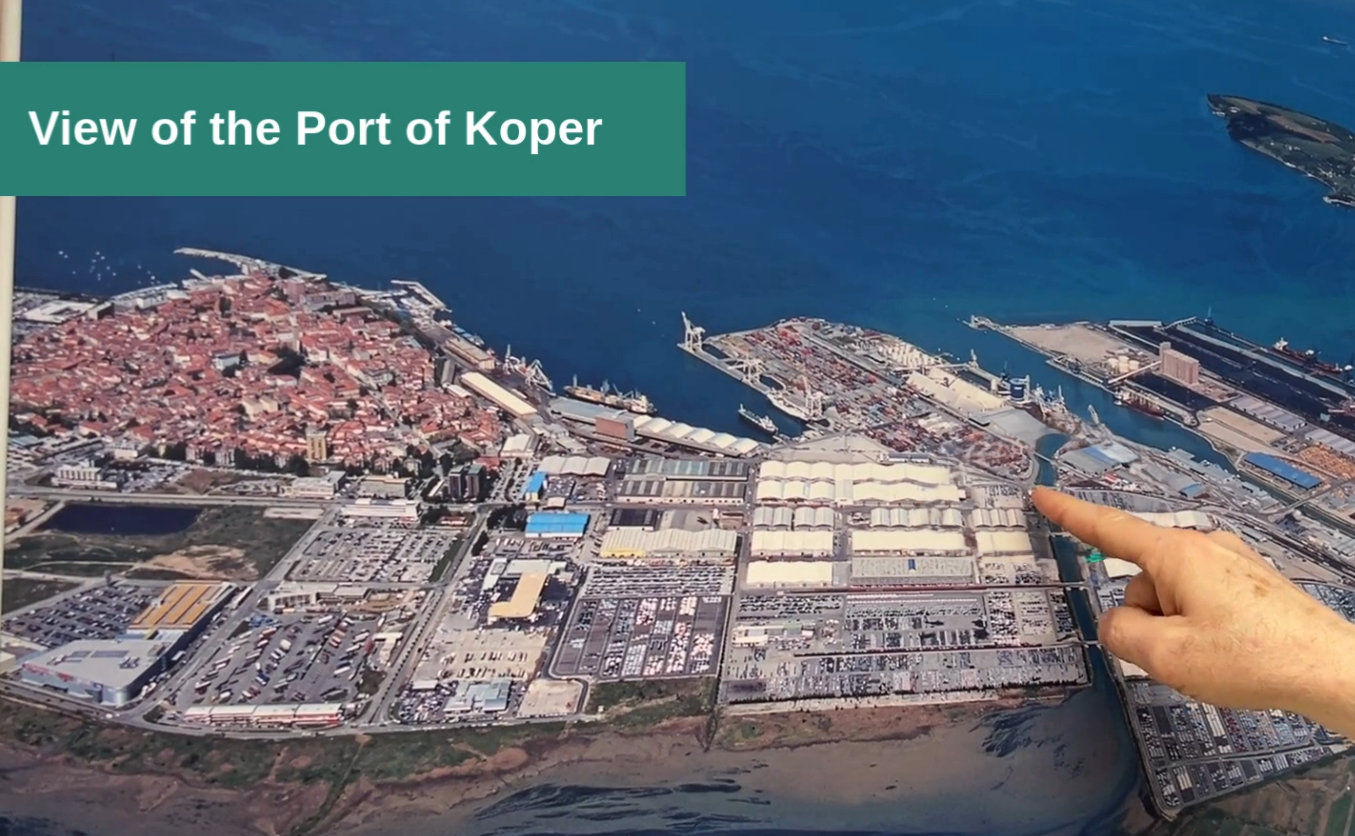
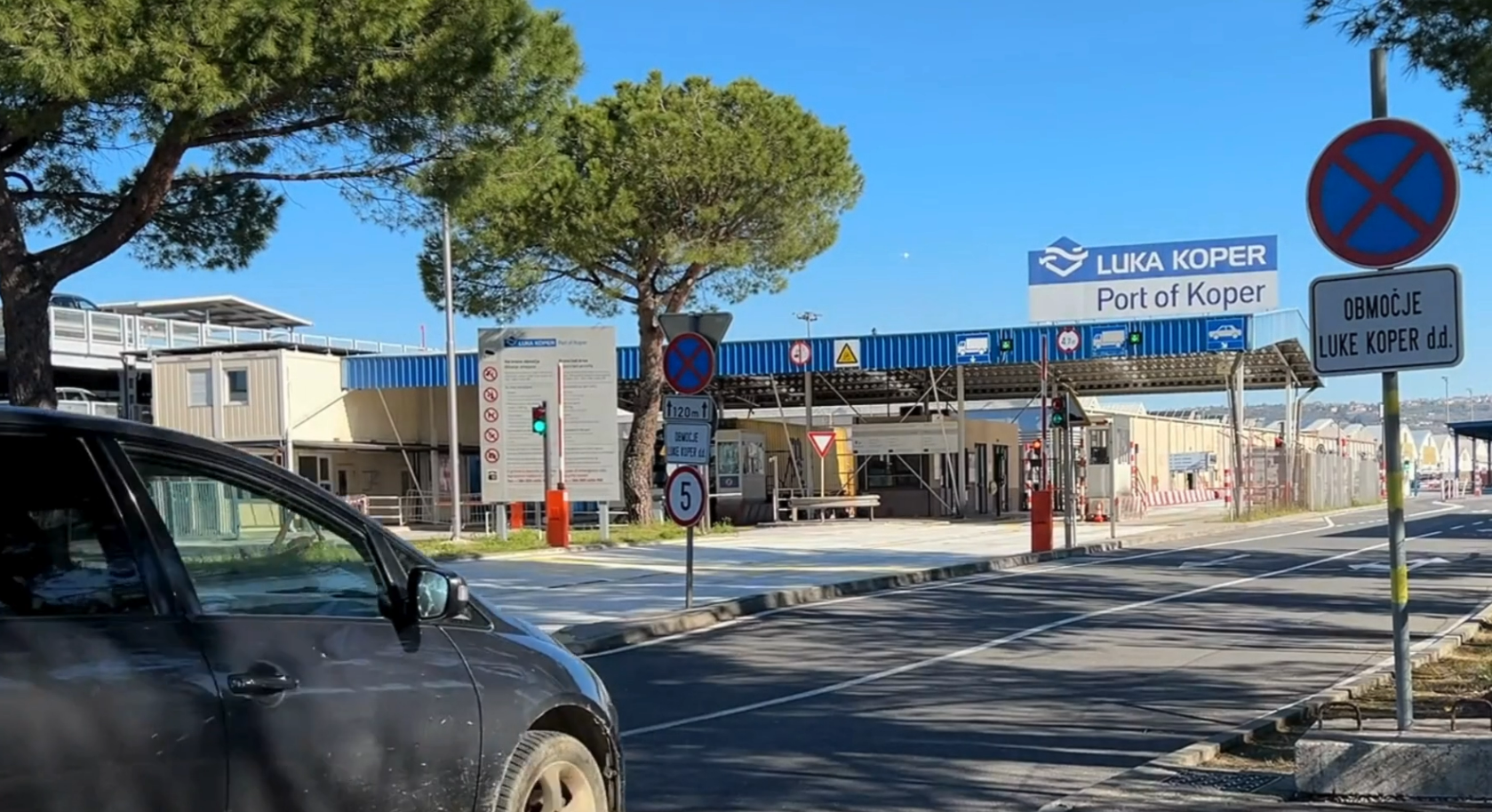
The Port of Koper is the only Slovenian cargo port and at the same time one of the most important logistics hubs in the northern Adriatic. Due to its geostrategic location, it represents an important entry and exit point for goods into the customs territory of the European Union, especially for the countries of Central and Eastern Europe. The volume and diversity of goods flow in the port require a high level of organization of customs control, which is carried out by the Financial Administration of the Republic of Slovenia (FURS). The main goal of this control is to ensure the smooth flow of trade while effectively preventing illegal activities.
The Port of Koper in Numbers
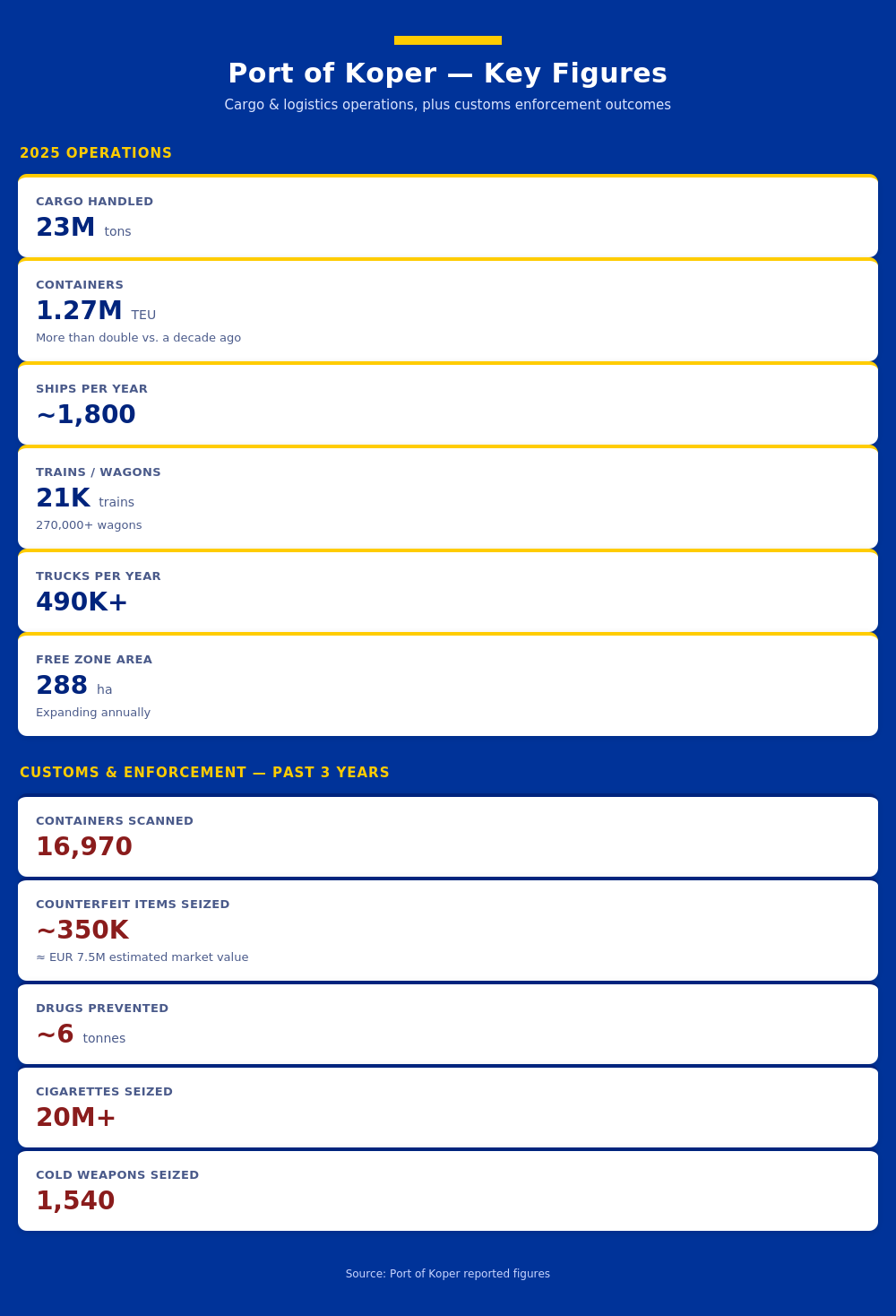
In 2025, approximately 23 million tons of cargo were handled at the Port of Koper. Container traffic stands out, exceeding 1.27 million container units(TEU) in 2025, having more than doubled in the last decade. The Port of Koper is the leader in the Adriatic Sea in the field of container traffic. In addition to containers, cars, general cargo, bulk and liquid cargo also account for a significant share of traffic. Almost 1,800 ships, almost 21,000 trains with more than 270,000 wagons and more than 490,000 trucks pass through the port annually, which places the Port of Koper among the most logistically intensive ports in the region. Such volumes require modern, well-organized and risk-adapted control.
Organization of Customs Control with a Focus on Risk Analysis and Innovation
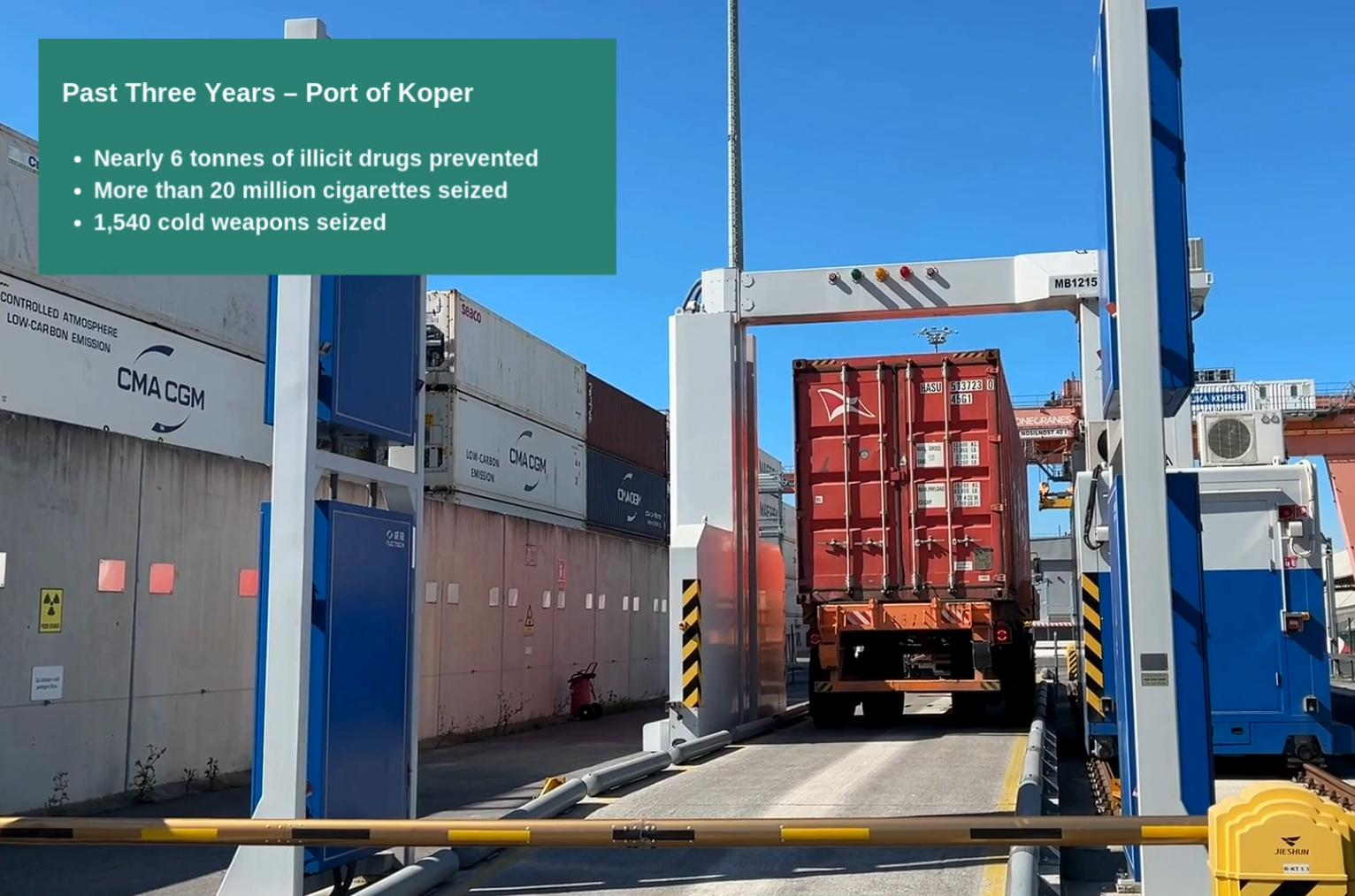
Customs control at the Port of Koper is carried out by the Financial Administration of the Republic of Slovenia. The port has the status of a free zone, covering 288 hectares and expanding annually. The land area of the free zone constitutes a designated area enclosed by a customs fence, preventing any unauthorized entry. In addition to the sea, access to the port is possible via three roads and one railway entrance, where control over the entry and exit of goods is carried out by the customs authority. The work of the customs service is based on a combination of risk analysis, operational controls and the use of modern technical equipment. A key role in this is played by a cargo scanner, which enables non-invasive inspection of containers, trucks and other means of transport.
Scanner Inspection’s Role in a Multi-Layered Control Approach
The use of scanners significantly increases the efficiency of controls. Given the extremely large volumes of goods, a physical inspection of each shipment is not possible, so a high-quality risk analysis is crucial. Based on data on shipments, commodity flows and past experiences, higher-risk shipments are identified. These are first examined using the scanner, where experienced customs officers analyze the scanned images and look for deviations from the expected cargo structure.
Where the analysis of scanned images confirms reasonable suspicion, a physical inspection of the cargo follows, usually carried out in a warehouse using additional control methods, including the involvement of customs dog handlers and, where necessary, the police. This multi-layered approach ensures efficient use of human and technical resources while minimizing interference with legitimate trade flows.
The use of scanners considerably facilitates the work of supervisory customs authorities, increases the effectiveness of controls and acts as a preventive measure. Numerous successful seizures of prohibited drugs, cigarettes and other illicit goods in recent years have resulted from careful assessment of subtle irregularities that an untrained eye would not have detected.
Based on manual and systematic risk analysis, a total of 16,970 containers were scanned at the Port of Koper over the past three years. During this period, the import of approximately 350,000 counterfeit items with an estimated total market value of around EUR 7.5 million was prevented, as well as nearly 6 tonnes of illicit drugs, more than 20 million cigarettes, and 1,540 pieces of cold weapons.
Impact on Security and Criminal Risks
The effectiveness of the described control system implemented by the Financial Administration at the port contributes to the security of the entire region. The Port of Koper thus remains a relatively secure port compared to some larger European hubs where security risks are more challenging.
Balancing technology and the human factor: local experience, shared purpose and impact
Experience from the Port of Koper shows that scanners are an indispensable tool of modern customs control, yet they are not sufficient on their own. High-quality risk analysis, professional expertise, experience and the so-called “customs officer’s instinct” remain crucial elements that complement technology and give it real value.
Strong European customs cooperation, such as built by EUCAB, enhances the ability to fulfill customs’ missions through exchange of knowledge, experience, and best practices.
Slovenian practice represents an example of a balanced approach that effectively supports legitimate trade while safeguarding the financial and security interests of the European Union.
EUCAB presents its sincerest thanks to Slovenian customs for sharing their experience and know-how. Special thanks to Barbara Škrinjar, Public Relations Communication Advisor.