
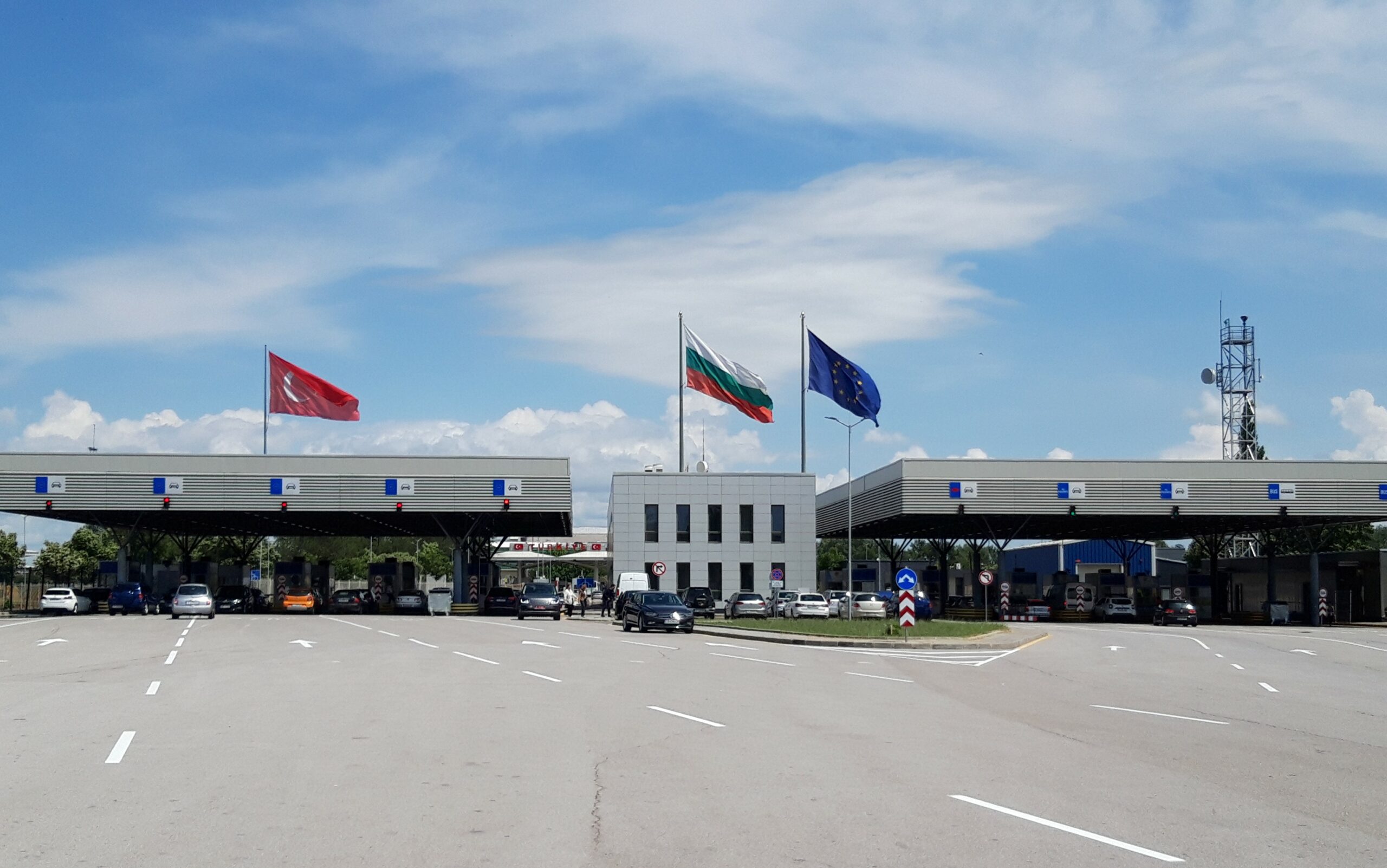
Located on the external border of the European Union with the Republic of Turkey, Kapitan Andreevo is much more than just a border crossing point (BCP) – it is one of the busiest and most strategically important land borders of the European Union, with thousands of trucks, cars and passengers passing through every day.
The checkpoint is a key hub for international trade and logistics on the main land transport corridor between Europe, the Middle East and Asia. Here, the interests of the economy, security and international relations intersect. Each inspection is important not only for Bulgaria, but also for the protection of the single European market.
Gateway between East and West
Since the accession of Bulgaria and Romania to the EU in 2007, the Kapitan Andreevo BCP has become the main gateway for the Union for a large part of goods coming from Turkey and the Middle East by land transport. Bulgarian customs officers take up the challenge of applying the common European rules and checking the compliance with both, customs legislation and the implementation of several European requirements related to product safety, consumer protection, intellectual property, excise regimes, import restrictions on certain goods and the application of international sanctions.
Customs officers assume increased responsibility since Bulgaria has become a full member of the Schengen area, starting with the 1st of January 2025, which means free movement for carriers after crossing the external border of the European Union. Indeed, the Kapitan Andreevo BCP becomes the only permanent control point between the East and the heart of Europe.
Traffic
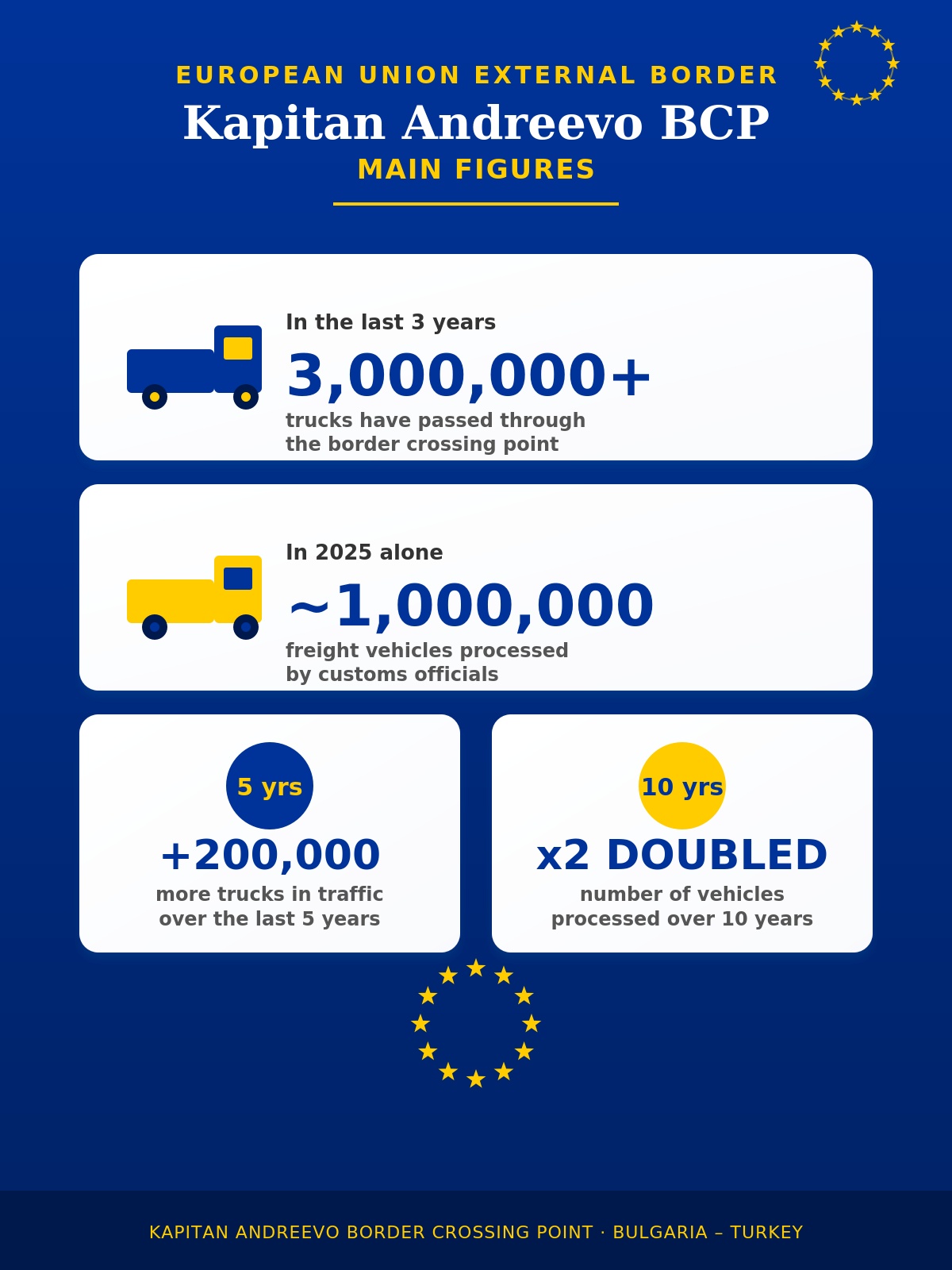
In the last three years, more than 3,000,000 trucks have passed through the Kapitan Andreevo BCP. Due to the good transport connectivity and its key location, the point is a preferred crossing point for land transport between Asia and Europe, playing an important role in commercial trade.
In 2025, as in 2024, nearly 1,000,000 freight vehicles were processed by the customs officials of the Kapitan Andreevo Customs Point. A record amount of 1,037,632 freight road vehicles were processed in 2023.
In the last five years, truck traffic increased by + 200,000, and in the last ten years, the number of processed vehicles has doubled.
Infrastructure
Record freight traffic poses new challenges to border crossing infrastructure. Designed decades ago, for a significantly lower flow of vehicles, the Kapitan Andreevo BCP is now operating at the limit of its capacity.
In order to reduce the waiting time and ensure faster processing of trucks, the National Customs Agency implemented a large-scale project to expand the customs point. New entry and exit lanes for heavy-duty vehicles, modern customs control areas, and additional inspection workplaces are expected to increase the throughput by 25% and create better conditions for effective customs control.
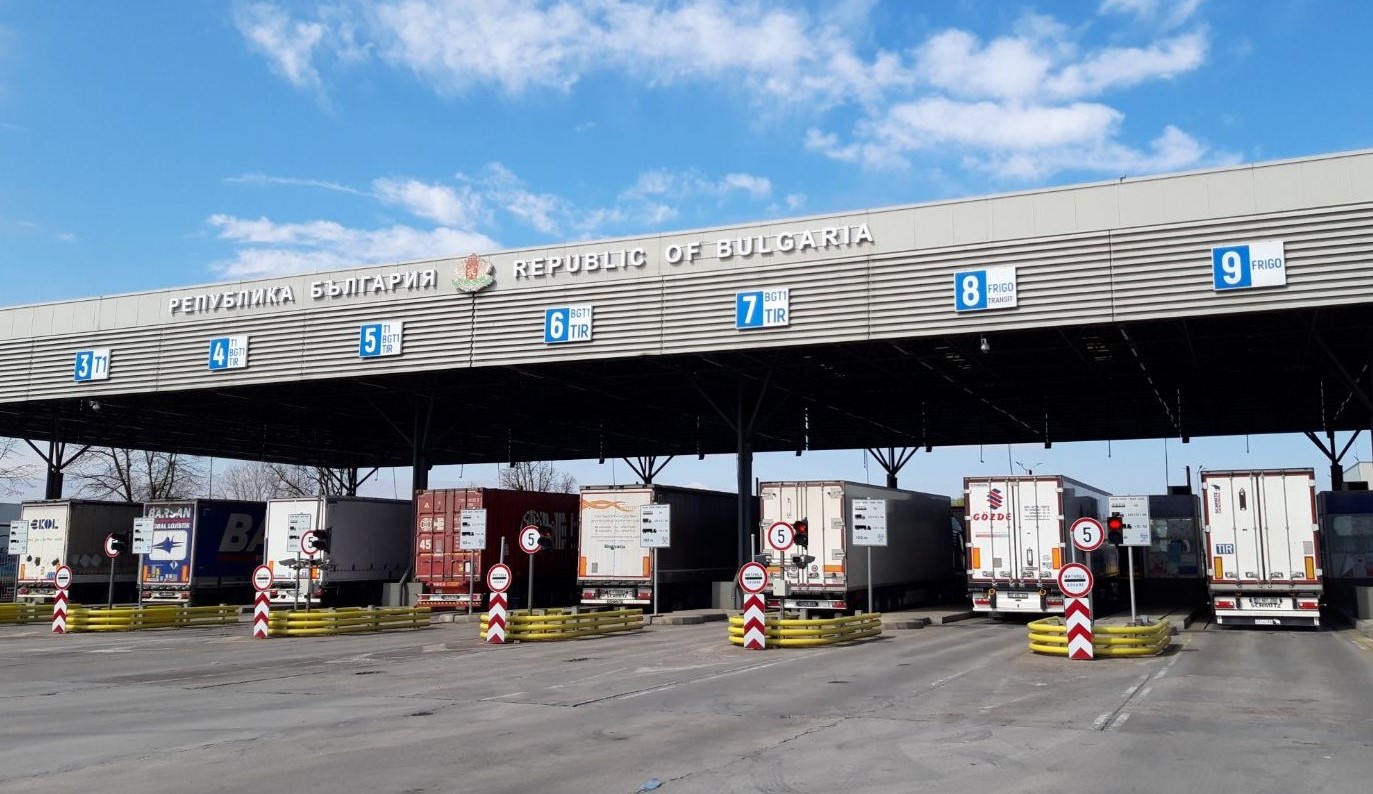
The expansion of the BCP is a strategic investment in the security of the external border of the European Union and in the development of one of the most important transport corridors between Europe and Asia.
This year, the Council of Ministers of the Republic of Bulgaria approved a draft agreement between the Government of the Republic of Bulgaria and the Government of the Republic of Turkey to resolve the issues related to border crossings between the two countries and to open a new border crossing Kapitan Andreevo-Kapakule-North.
Customs control begins long before the border.”
Georgi Gospodinov
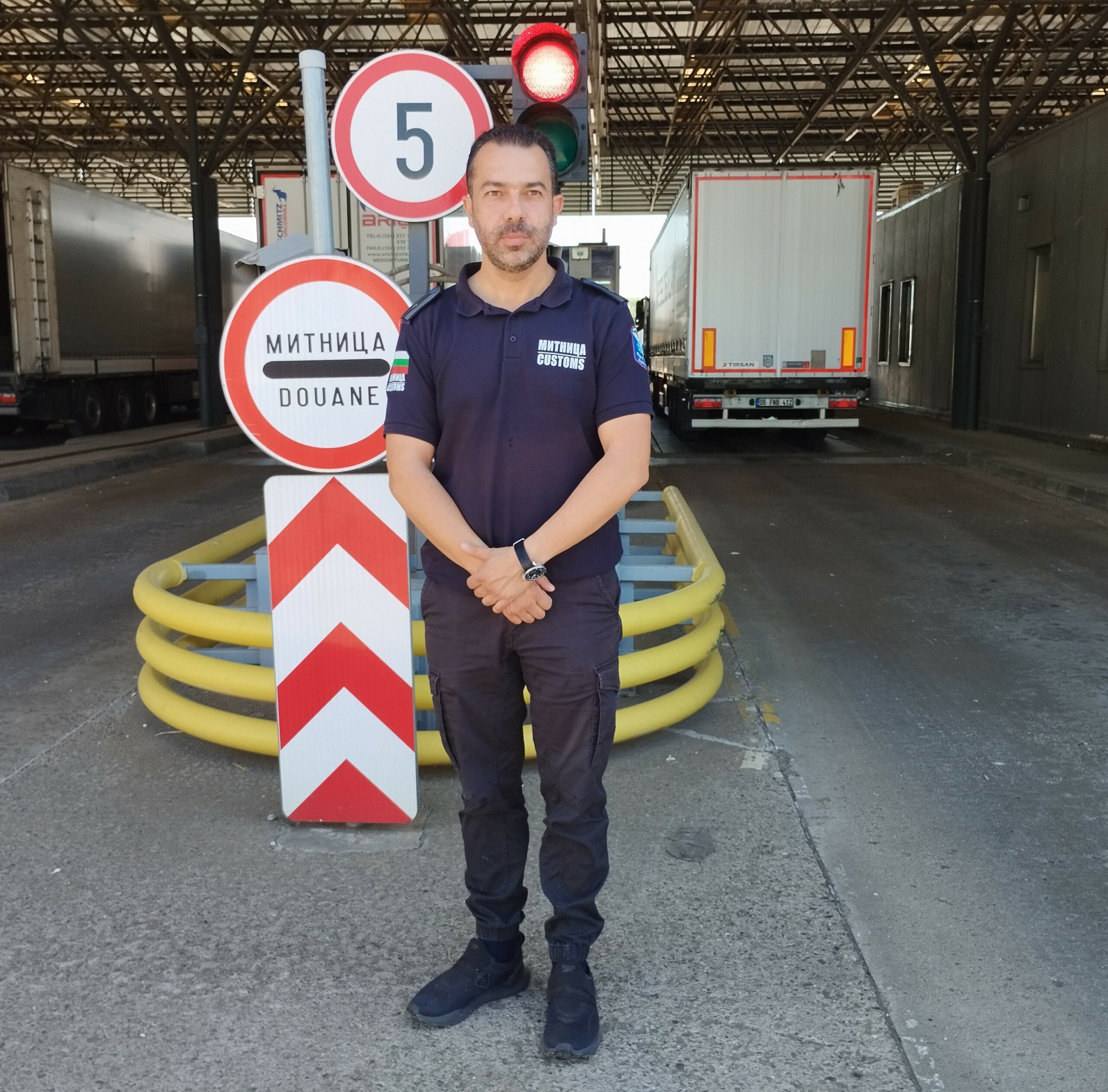
“Long before a vehicle arrives at the checkpoint, our work starts on the basis of risk analysis, pre-arrival information and data exchange with national and international institutions. This allows us to direct control where the probability of a violation is highest.
Every truck goes through an initial customs control, which includes a documentary check and measurement of the axle load using an electronic scale. Our employees analyze the accompanying documents, the type of goods, their origin, destination, and route of transport, while comparing the declared data with the weighing results. Checking the axle load can give indications of discrepancies between the declared and actual load, and is an important element of the risk analysis. Based on the collected information, several risk indicators are evaluated, which determine whether the vehicle will be released after a standard inspection or will be directed to a thorough customs control.
When necessary, we carry out a physical inspection of the cargo. We use modern X-ray technology, specialized equipment, and various control methods that allow us to detect hidden goods, narcotic substances, currency, excise goods, or other objects, the carrying of which violates the law.
Our work is a constant balance between two main tasks – to ensure the rapid passage of legal trade and at the same time to prevent illegal imports, smuggling, or fraud. This requires good preparation and the ability to make real-time decisions. Behind every truck are different goods, different companies and different risks. Our task is to assess in a very short time which vehicles require a more thorough inspection. This is where the professional experience of customs inspectors is decisive. Daily work of the customs officers often remains invisible to the public, but has a direct impact on the security of Bulgaria and the European Union. We work in close cooperation with the other control authorities, such as the Border Police or the Bulgarian Food Safety Agency. Only through coordination and exchange of information we can simultaneously guarantee the security of the external border of the European Union and the normal movement of international trade.”
Kapitan Andreevo BCP – first line in the fight against cross-border crime
The geographic location of the BCP makes it a key element in countering international drug trafficking under the so-called “Balkan route”.
In recent years, marijuana has been the most commonly trafficked type of drug, transported in land vehicles and destined for Turkey, where the demand and price are constantly increasing on the black market.
The largest amounts of marijuana seized in 2025 and 2026 were in two cases where the amount was similar – nearly 740 kg. They were found in the cargo compartments of two trucks, one transporting goods from Germany to Turkey, and the other from Poland to Turkey.
One of the most significant successes in countering international drug trafficking in 2025 was achieved within the framework of the specialized operation “Orient Express”. On July 18, 2025, customs officers, together with General Directorate Combating Organized Crime (GDBOP) officers, and under the direction of the prosecutor’s office, seized 205,940 kg of cocaine hidden in five suitcases transported in a car with a diplomatic registration plate. This represents the largest amount of cocaine seized at a land border in the history of Bulgaria, with the market value of the seized narcotic substance estimated at over BGN 37 million.
This record case is indicative of the growing complexity of international drug trafficking and the need for customs administrations to continuously develop their analytical capabilities, technical equipment and international cooperation. At the same time, it shows that the effective exchange of information between competent institutions can successfully neutralize even smuggling attempts carried out using diplomatic cover.
Along with combating drug trafficking, another significant priority in the activities of the customs officers of the Kapitan Andreevo Customs Point is the prevention of attempts to smuggle cigarettes and smoking tobacco.
Differences in prices and excise taxation between the individual countries of the European Union create a strong economic incentive for the illegal transport of cigarettes to Western European markets, where final consumer prices are significantly higher.
In this context, Kapitan Andreevo Customs Poin has a strategic importance not only for the protection of the Bulgarian budget, but also for limiting the illegal supply to other European markets.
The analysis of the detected cases shows that furniture is among the most frequently used means of concealing contraband cigarettes, as their internal cavities allow large quantities to be transported without visibly changing their appearance.
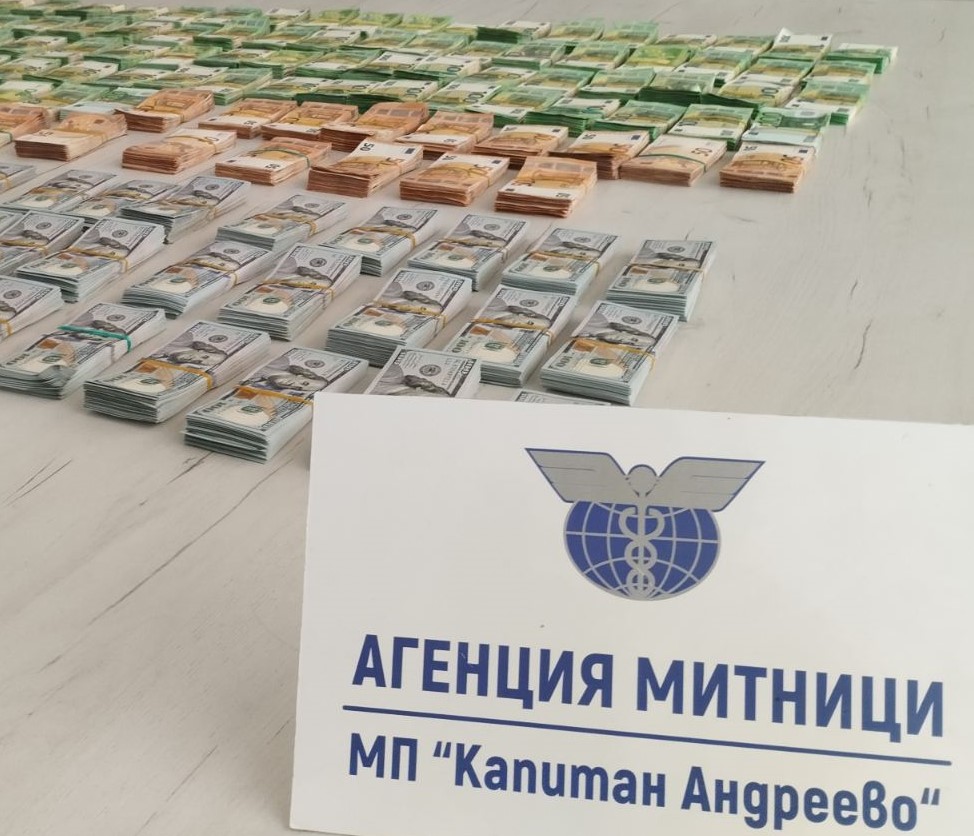
Another important aspect of the activity of Kapitan Andreevo BCP is the prevention of the illegal transfer of cash. Carrying large sums of cash without mandatory declaration is a serious risk, as it is often linked to money laundering, financing of organised crime, tax crimes and illegal trafficking of goods and drugs.
In most cases, cash is transported by passenger buses and minibuses traveling along a route mainly from Ukraine and Romania to Turkey. Undeclared cash is often hidden in trucks en route from Western Europe through Bulgaria to Turkey.
Identifying such cases is important not only for the enforcement of foreign exchange legislation, but also for tracking the financial flows behind other forms of cross-border crime.
Smuggling of precious metals and their products is one of the persistent directions of customs violations at the point.
The trend is two-way, and is determined by the economic features of the markets on both sides of the border. In the direction from Bulgaria to Turkey, customs officials mainly detect attempts to illegally export gold bars, investment gold, gold coins and unprocessed precious metal. These cases are characterised by a high value of the assets transferred and a relatively small physical volume, which allows the use of a variety of concealment methods. In the opposite direction – from Turkey to Bulgaria and the European Union – attempts to undeclared import of gold and silver jewellery, intended for commercial sale, are significantly more frequent. Most often, rings, bracelets, chains, earrings, lockets and other jewellery are carried, hidden in personal luggage, under clothing, in shoes, belts made for the purpose, or hidden in vehicles.
In addition to fiscal damage, illegal imports violate the principles of fair competition and disadvantage economic operators who comply with regulatory requirements.
Along with combating drug trafficking, the illegal transportation of cash and the smuggling of excise goods, one of the most common areas in the activities of the customs officers of Kapitan Andreevo BCP is the prevention of infringements of intellectual property rights.
Attempts to transfer fake textiles, perfumes, sports shoes, bags, wallets, and belts bearing signs of registered global trademarks are most often detected. In the majority of cases, the goods are intended for illegal distribution on the European Union market, with the aim of making high profits at the expense of the owners of the rights to trademarks, the state budget and consumers.
Counterfeit goods are detected both among the declared cargo and in cases where there is a discrepancy between the declared content and the transported goods.
International cooperation – a key factor for effective customs control
In the context of globalised trade and increasingly complex cross-border crime schemes, effective customs control cannot be based solely on national resources.
Kapitan Andreevo Customs Point is a natural center for conducting joint international operations aimed at countering cross-border crime. Over the years, customs officials at the point have participated in several international initiatives coordinated by the World Customs Organization (WCO), the European Anti-Fraud Office (OLAF), the European Commission, Europol, the European Border and Coast Guard Agency (Frontex), and other international partners. Preventing the illegal trafficking of drugs, excise goods, precious metals, currency and counterfeit goods requires constant exchange of information and coordinated actions between customs administrations, law enforcement authorities and international bodies.
This year, from June 15 to 26, 2026, operation “Pirates 4” was carried out at land border checkpoints, including the Kapitan Andreevo BCP as well as at ports, airports and logistics centers in Europe. The actions were led by Frontex, and the Bulgarian National Customs Agency was co-leader together with Europol.
The Bulgarian Customs Agency fully supports EUCAB activities, ensuring harmonized approaches, enhanced cooperation, and direct help to customs officers on the ground. Bulgarian Customs hosted a Land BCP Network Meeting in November 2025, participated in the Joint Control Activity “Black Flow Back”, and are facilitating Border Crossing Points Diagnostics in 2026, including a dedicated assessment of the Kapitan Andreevo border.
EUCAB presents its sincerest thanks to the National Customs Agency of the Republic of Bulgaria for experience and know-how sharing. Special thanks to Diana Markova, Alexander Raykov, Alexander Topalov, and the Public Relations and Institutional Etiquette Department.