

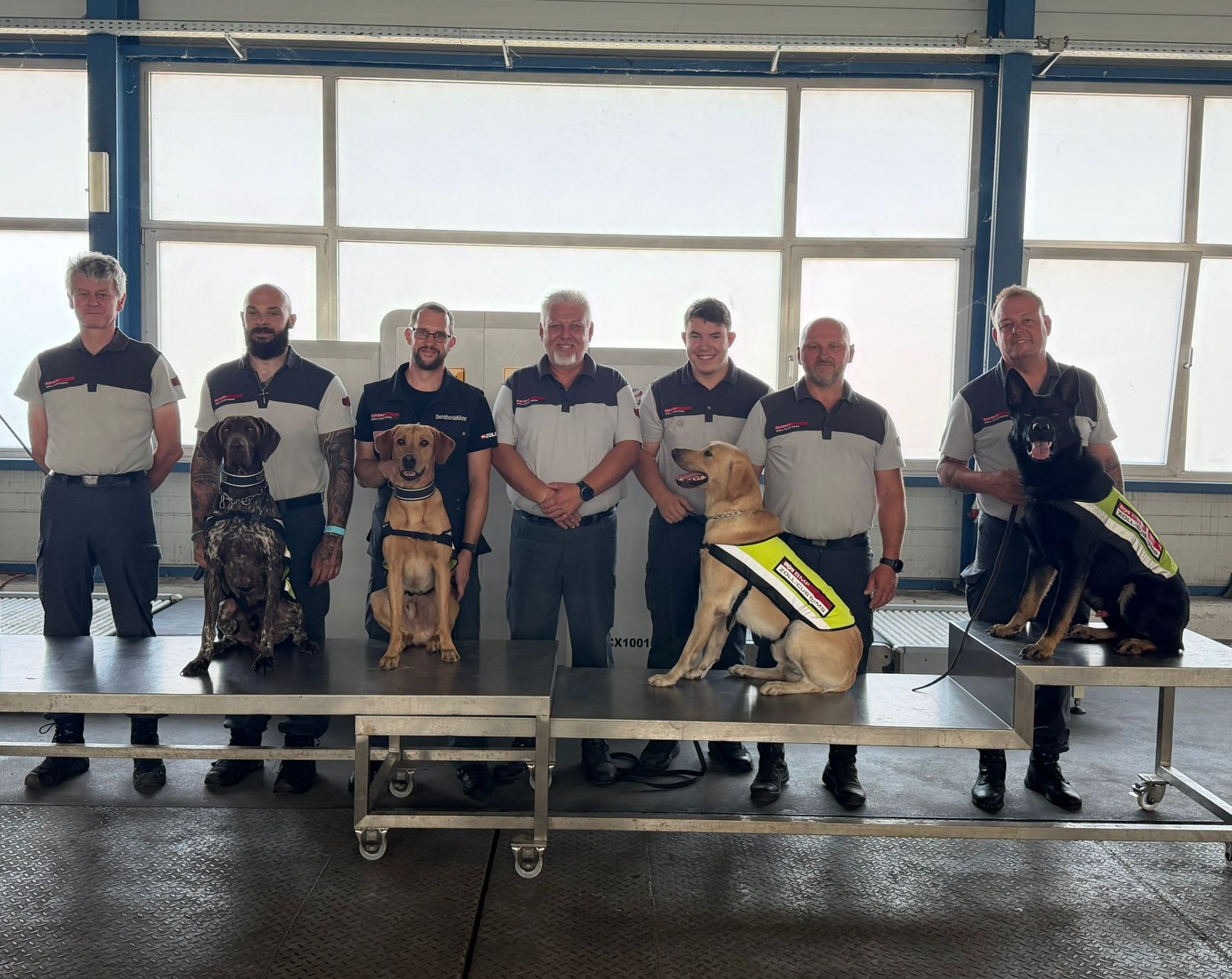
Customs detection dogs are a valuable complement to modern border control systems. As this report on service dogs of the Austrian Customs Administration shows, their effectiveness depends not only on the dogs’ detection abilities but also on the professional competence of their handlers, appropriate training, animal welfare, regular assessment and effective cooperation between customs authorities. Strengthening these elements can help Member States improve the detection of illicit goods, facilitate legitimate trade and contribute to the security of the EU’s external borders. This is why EUCAB actively supports cooperation among K9 units across EU, thus enhancing the operational contribution of detection dogs in customs activities.
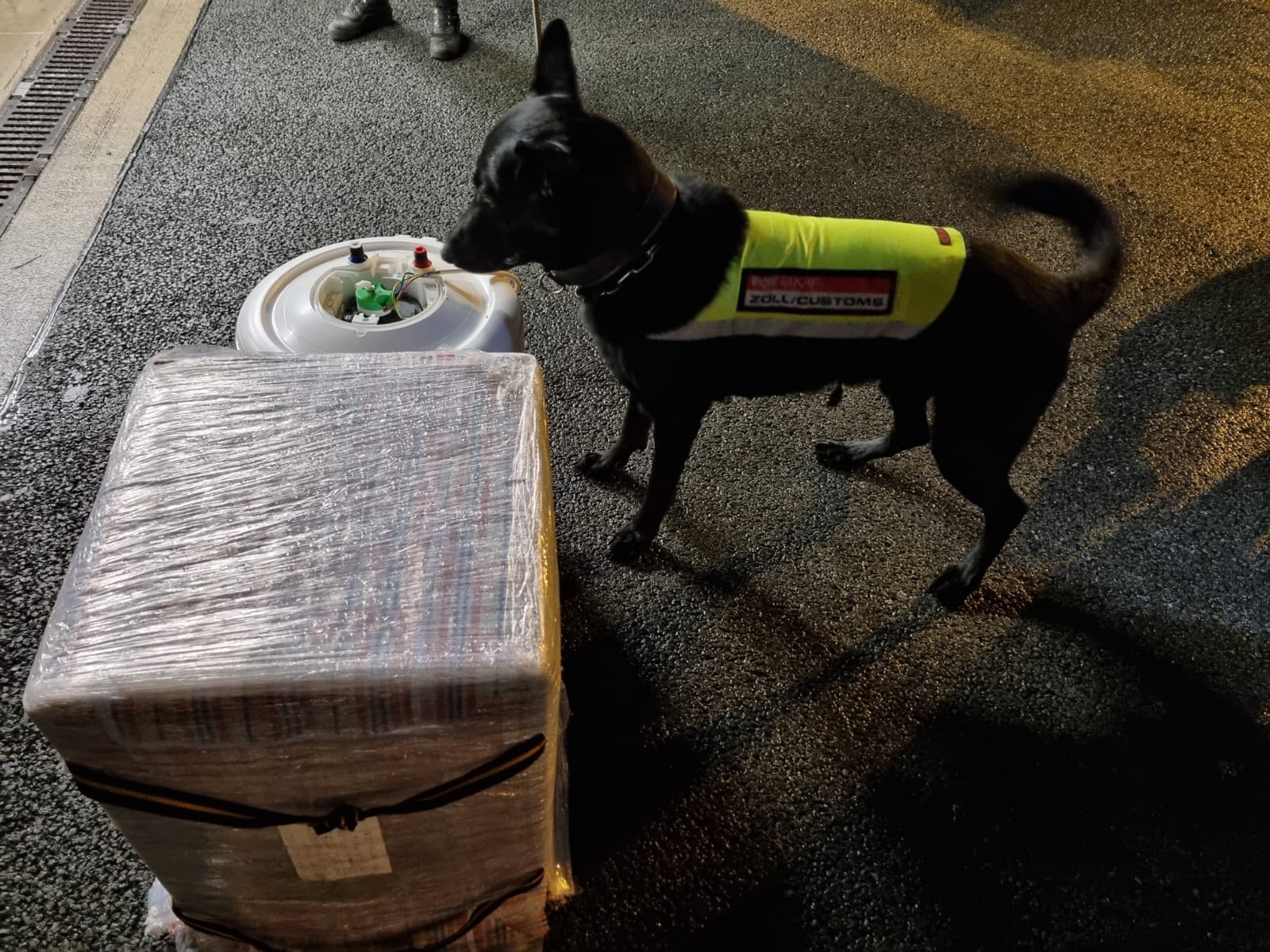
Training Service Dogs: Precision in Action
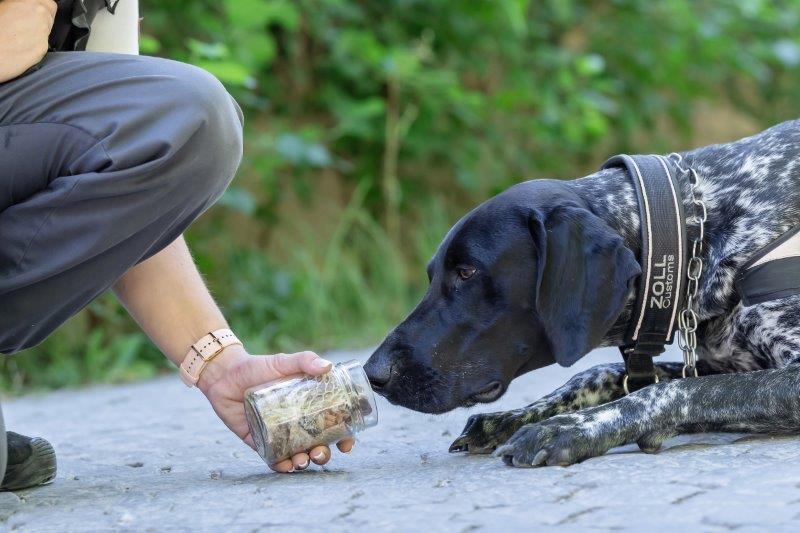
A keen sense of smell is the foundation, but it is only through specialized training that customs dogs become reliable partners on the job. From the playful initial approach to highly focused operations in complex situations—the dogs are trained to the highest standards.
In Austrian Customs, service dogs undergo combined training to precisely identify various search combinations. Specializations and search profiles include, among others:
- Drugs and tobacco
- Drugs and cash
- Drugs and endangered species
- Drugs, cash, and weapons/ammunition
The Principle of Passive Indication
A key characteristic of service dogs is their passive indication behavior. Instead of loudly signaling the location of a find, the dog remains in a stable position and focuses on the scent source with its nose and eyes.
This behavior serves as a crucial signal for the handler to conduct targeted inspections of vehicles or goods. To reinforce learning, the modern clicker method is used, in which the dogs are rewarded with food or toys.
Maximum Concentration Despite Distractions
As training progresses, the demands steadily increase. A skilled service dog must remain focused even in challenging environments. People, vehicles, luggage, or other odors must not interfere with the dog’s highly concentrated work.
Endangered Species Protection on Four Paws: An Austrian Pioneering Project
In addition to classic contraband such as cigarettes or cash, Austrian customs’ dogs are trained to detect endangered animals and goods as well.
Here’s how the training works:
- Broad conditioning: The service dogs are trained to detect about 15 to 20 different scent samples (e.g., feathers or snake skins).
- Practical cooperation: Through close collaboration with the Schönbrunn Zoo, realistic training can be ensured.
As a result, service dogs are ideally prepared to effectively combat the illegal trade in protected species worldwide.
Austrian Customs: An Overview of Service Dogs
- 29 service dogs deployed nationwide
- 3 dogs currently in active training
- Breeds: Primarily German Shepherds, as well as German Shorthaired Pointers and Labradors
Training Where Inspections Will Later Take Place
Service dogs learn where they will later work: in the real world. Instead of just on the training grounds, exercises take place directly at border crossings, customs offices, and airports. Through close collaboration with bus companies and car dealers, complex operational scenarios are being simulated. The goal is clear: the dogs must operate with the highest level of concentration and reliability, even in hectic and chaotic environments.
The Inspection Process: From Suspicion to Discovery
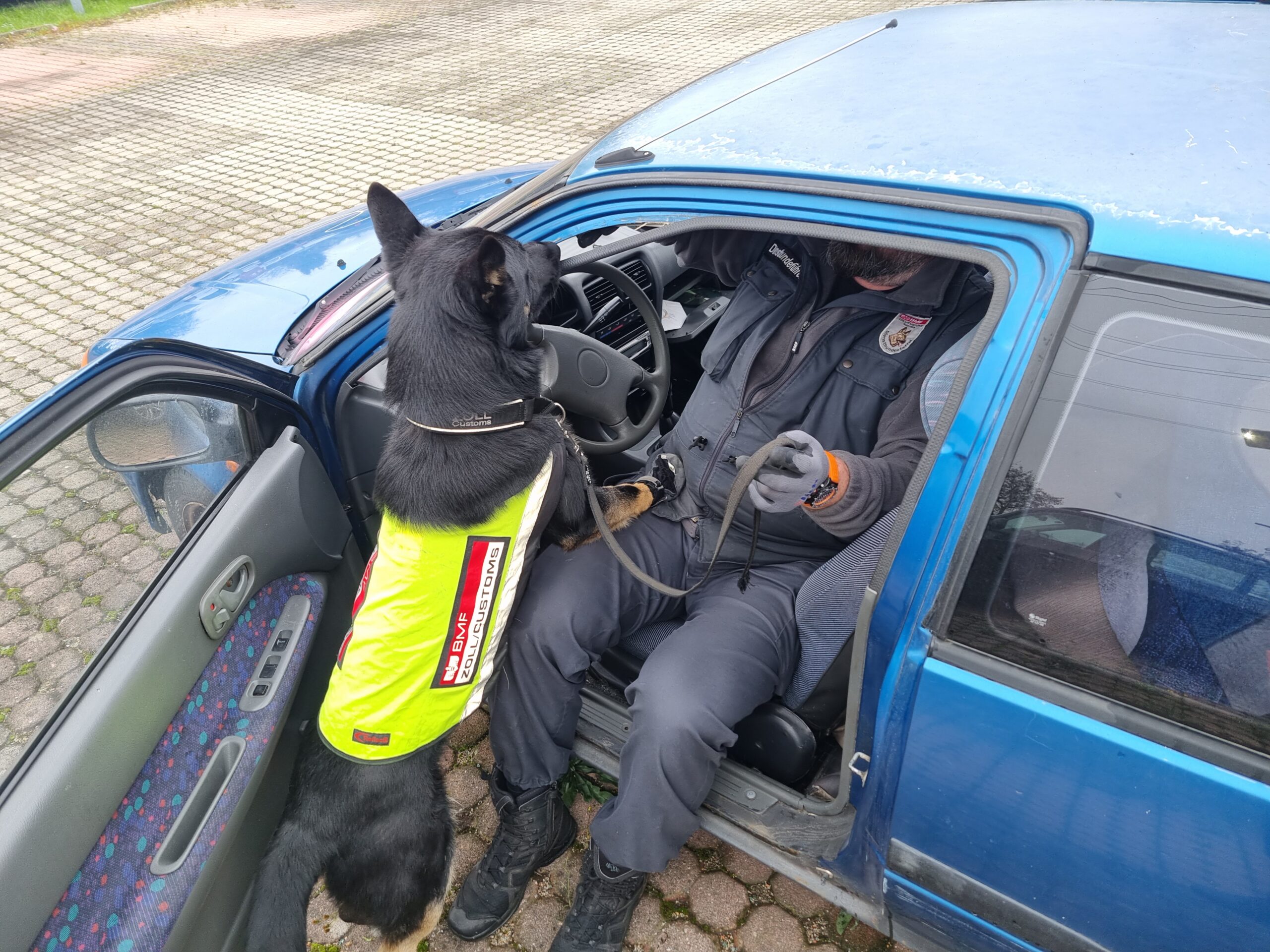
If discrepancies arise during a vehicle inspection, the deployment of a service dog can provide crucial support. The procedure follows a precise pattern:
The Search: Upon command, the service dog begins an intensive and focused search. It systematically checks all relevant areas, such as wheel wells, bumpers, side sills, and the interior.
The indication: If the dog detects a conditioned scent, it remains in a specific position. This passive indication signals the handler to intensify the inspection at that exact spot.
The result: Depending on the dog’s specialization, various contraband items can be uncovered, including drugs, tobacco, cash, weapons, or products made from protected species.
Such success is no coincidence. It is based on highly specialized training and the close, trusting partnership between the service dog and its handler.
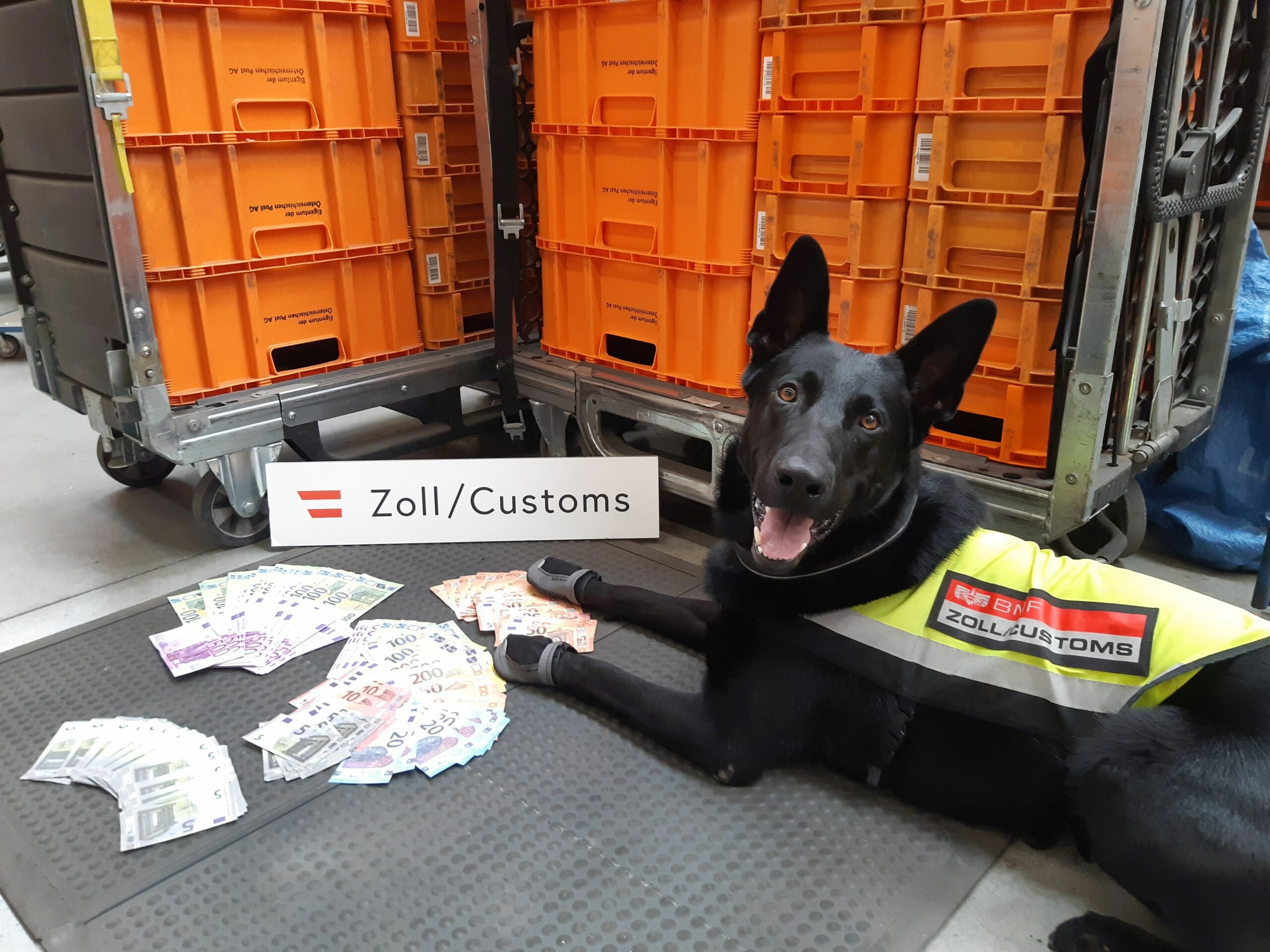
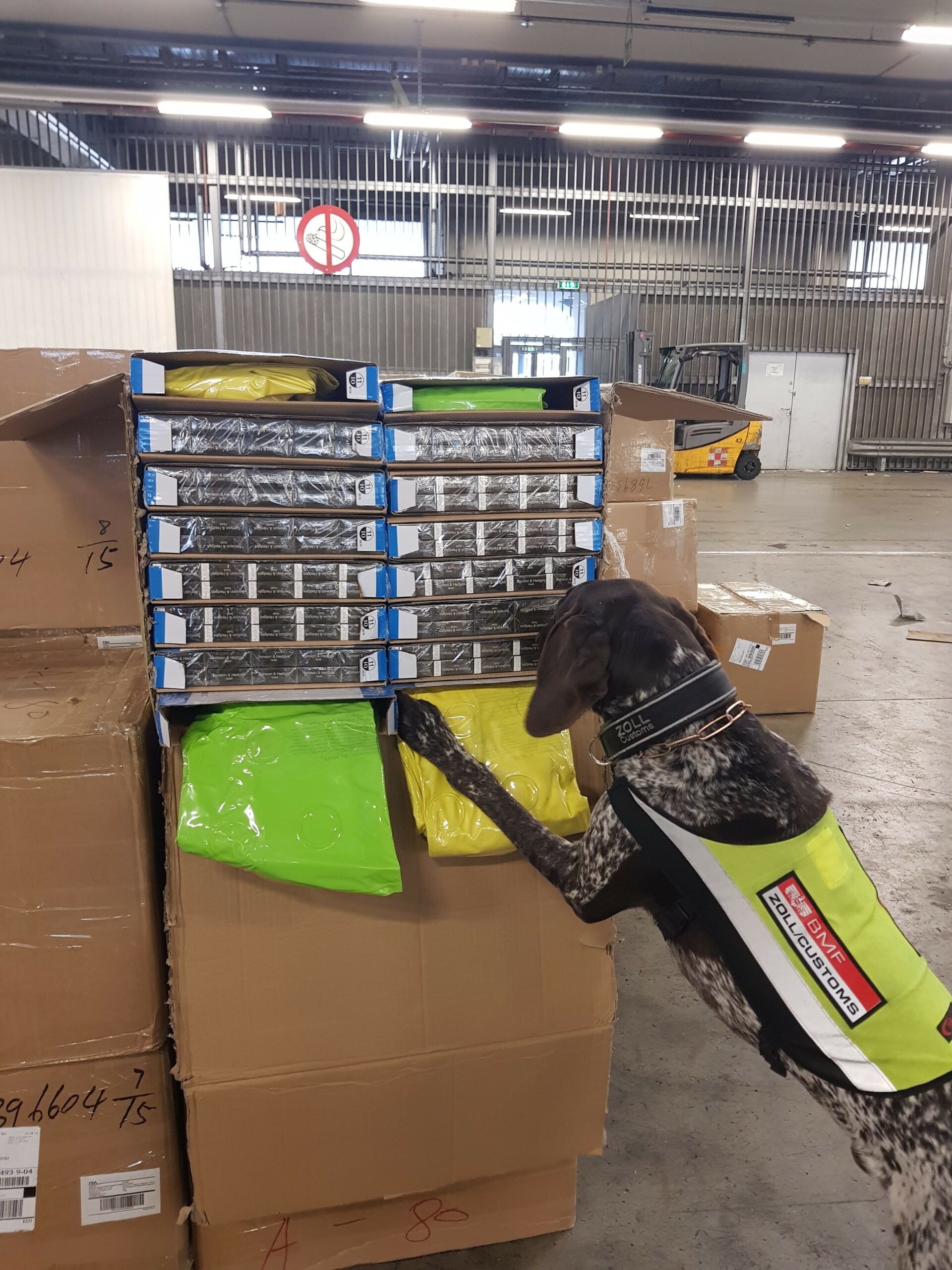
In 2025, 1,308 seizures were made. The seized goods included, among other things, 1,451,772 cigarettes, 309,577 kg of tobacco, approximately 241 kilograms of narcotics, and cash worth nearly 350,000 thousand euros.
A Lifelong Partnership: The Path to Retirement
After about ten years of intensive work and countless joint operations, a service dog retires. Years of intensive training and daily interaction create a bond that extends far beyond the line of duty. That is why most retired dogs remain at the side of their handlers even after their active service ends. The service ends—the bond remains.
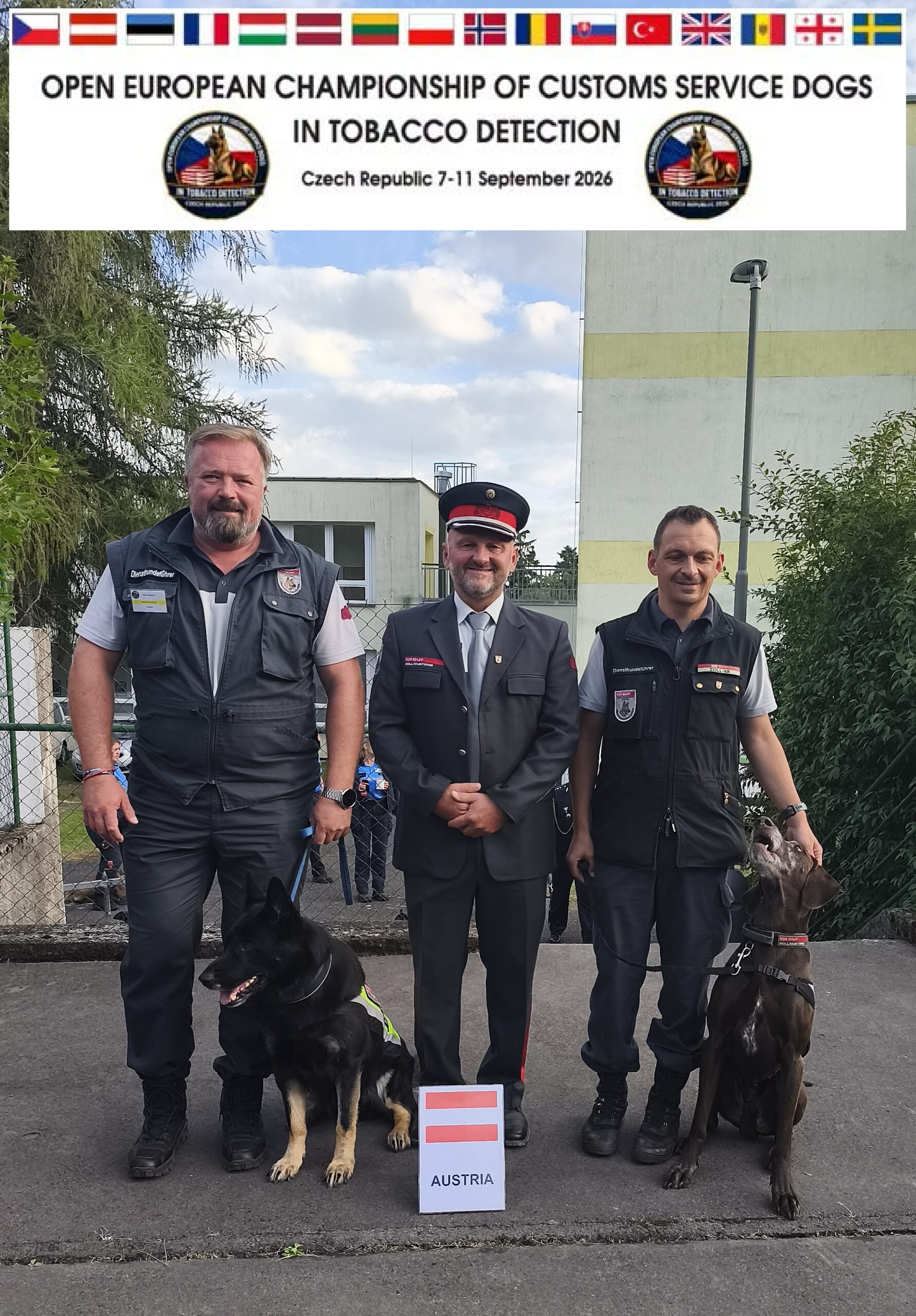
Service Dog Championships: More Than Just a Competition
European championships are an important part of professional development:
- Demonstration of Performance: Proof of concentration and teamwork under competitive conditions.
- Knowledge Transfer: Promotion of an intensive exchange of experiences among the teams.
- Visibility: Demonstration of the highly specialized working methods of dogs and their handlers.
Austrian Service Dogs for Europe’s Security
Even though the work of Austrian customs service dogs usually takes place away from the public eye, their role is crucial: always on duty to protect the single market and nature, because the work of these service dogs stops the flow of illegal goods, protects the European single market, and actively supports species conservation.
The service dogs of the Austrian Customs Administration are much more than just companions—they are an essential pillar of our enforcement work.
Together against smuggling. Together for secure borders. Together for Europe.
EUCAB presents its sincerest thanks to the Austrian Customs Administration for experience and know-how sharing.